

A garbage disposal should make kitchen cleanup easier, not turn into the appliance you have to fight every week. If yours keeps jamming, humming, leaking, smelling bad, or tripping the reset button, there is usually a reason. Sometimes the disposal is being asked to handle too much. Sometimes the wrong food is going down the drain. Sometimes the unit was installed poorly, has worn-out parts, or is simply past the point where another quick reset will help.
For Phoenix homeowners, garbage disposal problems can become especially frustrating because the kitchen is one of the hardest-working areas in the home. Between family meals, weekend gatherings, holiday cooking, and daily cleanup, a weak or damaged disposal is quickly exposed. Add older plumbing, hard water concerns, and years of under-sink wear, and a small issue can turn into repeat breakdowns.
The good news is that a garbage disposal that keeps breaking is not a mystery. The symptoms usually point to a specific cause. Once you know what to look for, you can decide whether the problem can be corrected with better usage habits, a repair visit, or a full replacement.
If your garbage disposal keeps breaking, here is what you should check before replacing it.
The Most Common Reason Garbage Disposals Keep Failing
Most garbage disposal problems start with overload. A disposal is designed to grind small food scraps, not replace the trash can. When too much waste goes down at once, the motor has to work harder, the grinding chamber fills too quickly, and the drain line can get packed with food particles.
This often happens after dinner, when plates are scraped into the sink, and the disposal is expected to grind everything in a single run. It may work a few times, but eventually the unit starts to jam, hum, or shut itself off.
If your disposal keeps breaking after heavy use, the issue may be the amount of food going into it at one time.
A better approach is to feed small amounts into the disposal while cold water is running. Let the unit grind the food completely before adding more. Keep the water running while the disposal operates, then let it continue for a few seconds after the grinding sound fades. That helps flush particles through the drain instead of leaving them inside the disposal or nearby plumbing.
This one habit can prevent many common jams.
Fibrous Foods Can Wrap Around the Grinding Components
Some foods are rough on garbage disposals because they are stringy or fibrous. These scraps do not break down cleanly. Instead, they can wrap around the moving parts inside the disposal, preventing the unit from spinning properly.
Common problem foods include:
- Celery
- Corn husks
- Onion skins
- Artichoke leaves
- Asparagus ends
- Banana peels
- Pumpkin pulp
These materials can create the classic humming problem. The disposal has power, but the grinding components cannot move freely. When homeowners keep flipping the switch, the motor may overheat or trip the reset button.
If fibrous foods have gone down the disposal and the unit now hums, turn it off. Do not keep trying to force it to run. Do not reach into the disposal with your hand. If you cannot safely clear the issue, call for garbage disposal repair.
Repeated jams caused by fibrous foods can shorten the unit’s life. Even if the disposal starts working again, the motor may have been stressed each time it jammed.
Starchy Foods Can Create a Thick Paste in the Drain
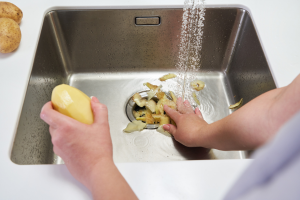
Starchy foods cause a different kind of problem. They may seem soft enough for the disposal, but once they mix with water, they can expand, thicken, and coat the inside of the disposal and drain line.
Foods to be careful with include:
- Potato peels
- Rice
- Pasta
- Oatmeal
- Bread
- Dough
- Beans in large amounts
These foods can make the disposal seem broken when the real issue is slow drainage or buildup past the disposal. The motor may run, the blades may spin, but the sink still drains slowly. That means food waste may be collecting in the drain line instead of moving through properly.
Potato peels are one of the biggest offenders. They can turn into a heavy paste that clogs the disposal chamber and nearby plumbing. Rice and pasta can continue swelling after they go down the drain, which makes the problem worse.
If your disposal works but the sink backs up or drains slowly, avoid sending more food down to “clear it.” That usually adds to the clog. The better move is to stop using the disposal and have the drain and unit checked.
Hot Water Can Make Grease Problems Worse
Many homeowners run hot water while using the disposal because it feels like hot water should clean better. With grease, the opposite often happens.
Hot water can liquefy fats, oils, and grease long enough to move them farther into the drain. Once they cool, they can stick to the pipe walls. Food particles then attach to that greasy buildup, creating a slow drain or recurring clog.
Cold water is better while the disposal is running. It keeps grease more solid, which helps the disposal and drain move waste more effectively.
A practical routine looks like this:
- Turn on cold water.
- Start the disposal.
- Add small amounts of food waste.
- Let the disposal finish grinding.
- Keep cold water running briefly afterward.
Grease should still go in the trash, not the sink. Wiping greasy pans with a paper towel before washing them can reduce disposal and drain problems.
If your garbage disposal keeps smelling bad or your sink drains slowly after rinsing greasy dishes, buildup may already be in the disposal or drain line.
Turning the Disposal Off Too Soon Leaves Waste Behind
Another common habit is turning off the disposal as soon as the loud grinding sound stops. That can leave small food particles inside the chamber. Over time, those particles can create odor, buildup, and additional jams.
A garbage disposal needs a few extra seconds to clear the chamber after the main grinding sound fades. Cold water should keep running during this time.
This is especially helpful when grinding small scraps from vegetables, fruit, or cooked meals. Even tiny particles can collect if the disposal is not flushed well.
If your disposal smells bad even though it still runs, leftover food waste may be part of the problem.
A Garbage Disposal Is Not a Trash Can
The fastest way to damage a garbage disposal is to treat it like a trash can. Some items are too hard, too dense, too greasy, or too likely to clog the drain.
Avoid putting these items down the disposal:
- Bones
- Fruit pits
- Seafood shells
- Coffee grounds
- Grease
- Large amounts of eggshells
- Large amounts of vegetable peels
- Paper
- Plastic
- Twist ties
- Bottle caps
- Glass
- Utensils
Coffee grounds deserve special attention. They seem harmless because they are small, but they can collect in the drain line and contribute to clogs. Eggshells are another debated item, but large amounts can create grit and buildup in the drain.
Hard items can damage the grinding components. Non-food items can immediately jam the unit. Grease can coat the disposal and plumbing. Each of these issues can lead to repeated service problems.
If your disposal keeps breaking, look closely at what has been going down the drain. Usage habits may be causing the same problem repeatedly.
What It Means When the Disposal Hums but Does Not Spin
A humming garbage disposal usually means the unit is receiving power, but the motor cannot turn the grinding components. This is often caused by a jam.
This symptom should be handled carefully. If the disposal hums and you keep turning it on, the motor can overheat. The reset button may trip, or the motor may burn out.
If your disposal hums:
- Turn it off right away.
- Do not keep flipping the switch.
- Do not put your hand inside the disposal.
- Check for an obvious foreign object only after power is off.
- Call a repair technician if the unit does not clear safely.
Sometimes a simple obstruction is the cause. Other times, the motor or internal parts are worn. A professional can inspect the disposal and determine whether repair is possible.
A humming disposal that keeps coming back after resets should not be ignored. That usually means the underlying issue has not been solved.
What It Means When the Reset Button Keeps Tripping
The reset button protects the disposal motor. When the unit overheats or gets overloaded, the reset button can trip, shutting the unit down.
A reset button that trips once may not be a major problem. The disposal may have been overloaded or jammed temporarily. But if the reset button keeps tripping, something is wrong.
Common causes include:
- A jam inside the disposal
- Too much food waste at once
- A motor that is overheating
- A failing motor
- Electrical connection problems
- A disposal that is undersized for the household
Pressing the reset button repeatedly does not fix the cause. It only restarts the unit until the same problem triggers it again.
If your disposal keeps needing to be reset, stop using it until it can be inspected. Repeated resets can put more strain on the motor and may turn a repairable issue into a replacement.
Leaks Under the Sink Should Be Handled Quickly
A leaking garbage disposal can damage the cabinet, flooring, and nearby plumbing. Even a small drip can create problems if it goes unnoticed.
Leaks can come from several places:
- The top mounting ring
- The sink flange
- The dishwasher hose connection
- The drain pipe connection
- The bottom of the disposal
- A crack in the disposal body
Where the leak appears matters. A leak near the top may indicate a worn seal or a loose mounting. A leak at the side may involve the dishwasher or the drain connection. A leak from the bottom often points to internal failure, especially if the unit is older or corroded.
A cracked disposal body usually means replacement is the better option. Loose fittings or worn seals may be repairable.
If you see water under the sink when the disposal runs, do not wait. Water damage under the cabinet can become more expensive than the disposal repair itself.
Loud Grinding, Rattling, or Metal Sounds Are Warning Signs
Garbage disposals are noisy, but they should not sound like metal is bouncing around inside. Loud rattling, scraping, or grinding can indicate that a foreign object is inside the chamber or that an internal part has loosened.
Common items that accidentally fall in include:
- Spoons
- Forks
- Bottle caps
- Small glass pieces
- Pull tabs
- Screws
- Food packaging pieces
Turn off the disposal immediately if you hear a sharp metallic sound. Continuing to run the disposal can damage the grinding plate, impellers, or motor.
After the power is off, you may be able to remove an obvious object with tongs or pliers. Never use your hand. If the sound continues after the object is removed, the unit may have internal damage and should be inspected.
A disposal that starts making new loud noises should not be treated as normal wear. It usually tells you something has changed.
Persistent Odors May Point to Buildup
A garbage disposal that smells bad does not always need to be replaced, but a persistent odor means food waste is sitting somewhere it should not be.
Odor can come from:
- Food stuck inside the grinding chamber
- A dirty splash guard
- Grease buildup
- Slow drainage
- Food waste caught in the drain line
- Poor flushing habits
A simple cleaning may help. Run cold water, add a small amount of dish soap, and let the disposal operate briefly. If the splash guard is removable, clean it carefully. Many bad smells come from the underside of the splash guard where food residue collects.
Avoid harsh drain chemicals unless a professional recommends them. Some products can damage plumbing components or create safety risks.
If the smell returns quickly after cleaning, the issue may not be surface-level. There may be buildup deeper in the disposal or drain line. That is when a repair visit makes sense.
Poor Installation Can Cause Repeat Problems
Sometimes the disposal keeps breaking because it was not installed correctly. A bad installation can create vibration, leaks, drainage problems, and dishwasher connection issues.
Signs of a poor installation include:
- The disposal shakes when running.
- Water leaks from the mounting area.
- The sink drains slowly after installation.
- The dishwasher backs up.
- The unit sounds louder than expected.
- Drain fittings loosen repeatedly.
Garbage disposals need to be mounted securely and aligned with the drain plumbing. If the unit is crooked, loose, or poorly sealed, vibration can create leaks over time.
This is one reason professional installation matters. A new disposal can still cause problems if it is connected incorrectly.
Dishwasher Drain Problems Can Be Connected to the Disposal
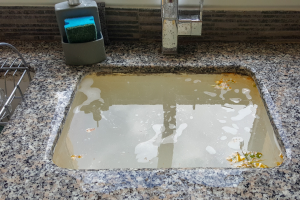
Many dishwashers drain through or near the garbage disposal. When a disposal is replaced, the dishwasher connection must be handled correctly.
One common installation mistake involves the knockout plug. If the dishwasher drains through the disposal and the knockout plug is not removed during installation, the dishwasher may not drain properly.
Symptoms can include:
- Standing water in the dishwasher
- Gurgling sounds during dishwasher draining
- Water is backing up into the sink
- Bad smells near the sink
- Slow drainage after dishwasher cycles
Homeowners may think the dishwasher broke, but the issue may be tied to the disposal installation.
If disposal problems started after a new unit was installed, the dishwasher connection and drain setup should be checked.
The Disposal May Be Too Small for the Household
Garbage disposals come in different motor sizes. A small unit may be fine for light use, but it can struggle in a busy kitchen.
A lower-powered disposal may be more likely to jam if the household cooks often, prepares large meals, or uses the disposal daily. If the same disposal keeps jamming despite careful use, it may not be the right fit.
A stronger unit may be a better option for:
- Families that cook most meals at home
- Homes where the kitchen gets heavy daily use
- Homeowners who frequently host guests
- Kitchens connected to dishwashers with frequent use
- Older units that no longer grind efficiently
This does not mean every homeowner needs the most powerful unit available. It means the disposal should match the way the kitchen is used.
A technician can help determine whether your current disposal is worth repairing or whether a properly sized replacement will perform better.
When Repair Makes Sense
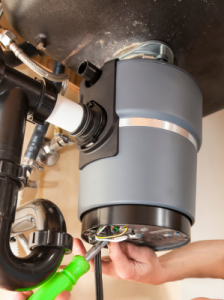
Not every garbage disposal problem requires replacement. Many issues can be repaired if the unit is still in decent condition.
Repair may make sense when:
- The disposal has a simple jam.
- The motor still works.
- A connection is loose.
- The leak is coming from a fitting.
- The reset issue happened after one overload.
- The unit is fairly new.
- The disposal has not had repeated major problems.
A repair visit can save money when the problem is isolated. For example, a loose drain connection does not mean the whole disposal is bad. A foreign object stuck inside the chamber may be removable. A minor installation issue may be corrected without replacing the unit.
The key is knowing whether the issue is a one-time problem or part of a pattern.
When Replacement Is the Better Choice
Replacement is usually the better call when the disposal has major damage, is old, or keeps failing after repairs.
Replacement may make sense when:
- The motor is burned out.
- The disposal leaks from the bottom.
- The housing is cracked.
- Internal parts are badly worn.
- The unit jams frequently.
- The disposal is undersized.
- The repair cost is too close to the replacement cost.
- The unit has corrosion or heavy wear.
A disposal that keeps breaking can waste time and money. At a certain point, another repair may only delay the same problem.
Professional replacement ensures a properly installed unit with secure connections, correct drain alignment, and a better fit for your kitchen’s use.
What You Can Safely Check Before Calling for Service
Before calling for repair, there are a few safe checks you can make.
First, turn the disposal off. If you plan to inspect anything near the grinding chamber, disconnect power or turn off the breaker. Never put your hand inside the disposal.
Next, look for obvious foreign objects. A spoon, bottle cap, or small piece of glass can jam the unit. If the power is off, you may be able to remove the item with tongs or pliers.
Then check the reset button. If the disposal shuts down after a heavy load, let it cool and press the reset button once. If it trips again, stop using the unit.
Look under the sink for water. Try to identify whether the leak appears at the top, side, drain connection, dishwasher hose, or bottom of the disposal. This information can help the technician diagnose the problem faster.
Pay attention to when the issue happens. Does it leak only when the disposal runs? Does it back up when the dishwasher drains? Does it hum after certain foods go down? These details matter.
Phoenix Kitchen Conditions Can Add to the Problem
Phoenix-area kitchens see a lot of daily wear. Hard water, frequent cooking, older homes, and heavy summer utility use can all affect how under-sink appliances and plumbing perform.
Hard water can contribute to mineral buildup around fixtures and connections. Older kitchen plumbing may have worn seals, aging drain components, or prior repairs that were not done cleanly. High-use kitchens can expose weak garbage disposals faster.
This is especially true during holidays, family gatherings, and meal prep days. A disposal that barely handles normal use may fail when large amounts of food waste start going down the drain.
If your disposal has already been acting up, it is better to schedule service before a major cooking day instead of waiting for it to fail when the sink is full.
How The Bargain Busters Can Help
The Bargain Busters Appliance Sales and Service helps Phoenix-area homeowners with garbage disposal repair and installation. If your disposal will not turn on, keeps humming, leaks under the sink, smells bad, or trips the reset button, a service visit can help determine the cause.
The right repair depends on the problem. A jammed disposal may be fixable. A loose connection may need adjustment. A leaking unit may need a new seal or replacement. A burned-out motor or cracked housing may mean the unit has reached the end of its life.
The value of calling a local appliance repair company is that you do not have to guess. You can get a practical answer on whether repair or replacement makes more sense.
For homeowners in Phoenix and the Greater Valley, same-day appliance repair can prevent a disposal problem from turning into a bigger kitchen issue. That matters when water is leaking under the cabinet, the sink is clogged, or the dishwasher is not draining properly.
Stop Letting the Same Garbage Disposal Problem Come Back
A garbage disposal that keeps breaking usually isn’t just bad luck. The cause may be food overload, fibrous scraps, starchy buildup, grease, worn parts, poor installation, a bad connection, or a unit that is no longer strong enough for the home.
Some problems can be prevented with better habits. Use cold water. Feed food waste slowly. Keep grease, coffee grounds, bones, pits, and fibrous scraps out of the disposal. Let the unit run long enough to clear the chamber.
But if your disposal keeps humming, leaking, tripping the reset button, draining slowly, or making unusual sounds, it is time to get it checked.
Call The Bargain Busters Appliance Sales and Service at (602) 616-4338 for garbage disposal repair or installation in Phoenix and the Greater Valley. Get the problem diagnosed, find out whether repair or replacement is the smarter choice, and stop dealing with the same broken disposal every week.
FAQs
Why does my garbage disposal keep humming but not spinning?
A humming garbage disposal usually means the unit has power, but the grinding components are jammed, or the motor cannot turn. Turn it off right away. Do not keep flipping the switch, and do not reach inside the disposal with your hand. If the jam does not clear safely, call for repair.
Why does my garbage disposal keep needing to be reset?
The reset button trips when the disposal overloads, overheats, or has an electrical or motor issue. One reset after a minor overload may be fine. If the reset button keeps tripping, the disposal needs to be inspected.
What foods should I avoid putting down the garbage disposal?
Avoid grease, coffee grounds, bones, fruit pits, seafood shells, pasta, rice, potato peels, celery, onion skins, corn husks, and large amounts of eggshells. These items can jam the unit, strain the motor, or clog the drain line.
Is it better to repair or replace a garbage disposal?
Repair may make sense for a simple jam, a loose connection, a minor leak, or a reset issue. Replacement may be better if the motor is burned out, the unit leaks from the bottom, the housing is cracked, or the disposal keeps breaking after past repairs.
Can a bad installation make my garbage disposal keep breaking?
Yes. Poor mounting, loose plumbing connections, improper drain alignment, or mistakes in dishwasher connections can cause recurring leaks, vibration, slow drainage, and backup problems.
Why does my sink drain slowly after I use the garbage disposal?
The disposal may be grinding, but food waste could be building up in the drain line. Starchy foods, grease, and coffee grounds are common causes. If slow drainage keeps returning, the disposal and drain line should be checked.
Can The Bargain Busters install a new garbage disposal?
Yes. The Bargain Busters Appliance Sales and Service provides garbage disposal repair and installation support for homeowners in Phoenix and the Greater Valley. If your disposal keeps breaking, they can help determine whether repair or replacement makes more sense.